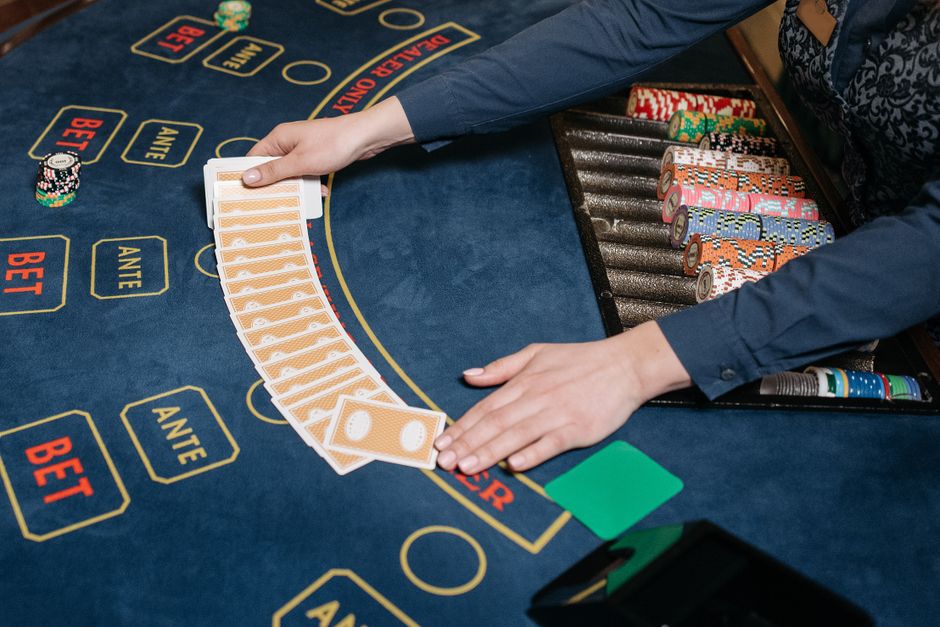
How to play blackjack? Rules, basic strategy and the best casinos
Blackjack is the most favourable casino table game, where skill matters. Learn the rules, card values, moves and basic strategy, and find the best blackjack casinos.
Looking for the full rules? See the in-depth guide blackjack rules — the basic strategy charts, what each table rule costs and the real price of side bets.
Blackjack, or 21, is the world's most popular casino table game — and one of the few where your decisions actually affect the outcome. With correct basic strategy the house edge drops to about half a percent, making blackjack one of the most favourable games in the casino. In this guide you'll learn the rules, card values, moves and basic strategy, and where to play blackjack in Estonia. The term is defined in our glossary: blackjack.
Blackjack rules in brief
The goal of blackjack is to collect cards totalling as close to 21 as possible without exceeding it. You play against the dealer, not other players. Each hand starts with two cards; then you decide whether to take more (hit) or stay (stand). If your total exceeds 21 you lose immediately (bust). If your hand beats the dealer's without going over 21, you win. Exactly 21 from two cards (ace + ten) is a "blackjack" and usually pays 3:2.
Card values and reaching 21
Cards count as follows: 2–10 at face value, face cards (jack, queen, king) = 10, and the ace = 1 or 11, whichever helps you. A hand where the ace counts as 11 is called a "soft" hand. For example, ace + 6 is a soft 17, which you can safely improve. The goal isn't always to hit 21, but to beat the dealer — often 18–20 is enough.
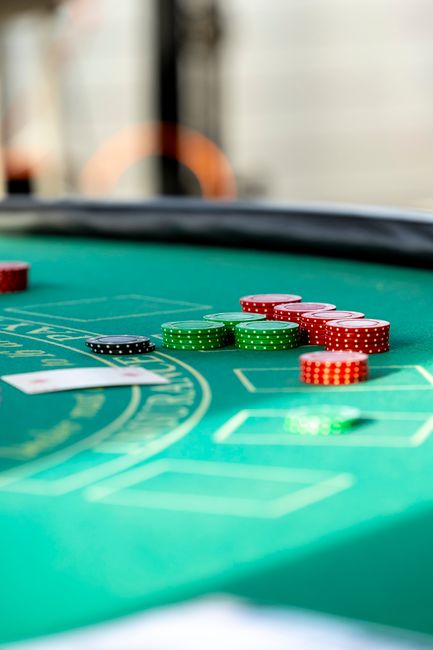
Dealer rules — when the dealer takes a card
Unlike you, the dealer makes no choices — they follow fixed rules. In most casinos the dealer must take cards until their total is at least 17, then stand. At some tables the dealer must also hit on a soft 17 (ace + 6), which slightly raises the house edge. The dealer's up card is the basis of your strategy: if the dealer shows a weak card (4–6), they have a high chance of busting.
Blackjack moves: hit, stand, double, split
Blackjack has four core moves. Hit — take another card. Stand — stay. Double down — double your bet and take exactly one card (useful when your total is 10 or 11). Split — if your two cards are the same value, split them into two separate hands. Some tables also offer surrender (fold for half your bet) and insurance (against a dealer ace) — usually avoid insurance, as its house edge is high.
Basic strategy — how to reduce the house edge
Blackjack basic strategy is the mathematically optimal move for every possible hand and dealer card. For example: always stand on 17 or more; hit and double on 11 when the dealer is weak; always split aces and eights, never split tens. Following basic strategy drops the house edge to about 0.5% — the best you can do without card counting. You can keep a strategy chart beside you.
Blackjack house edge and RTP
Blackjack is one of the highest-RTP casino games: with good rules and basic strategy the return can exceed 99%. The house edge depends on the table rules — how many decks are used, whether blackjack pays 3:2 or 6:5 (always prefer 3:2), and whether the dealer hits soft 17. Read the rules before playing, as a 6:5 payout raises the edge noticeably.
Where to play blackjack
Blackjack can be played at an automated table or with a live dealer. See our hand-picked blackjack casinos and the wider table-game casinos. The most authentic experience is a live casino, where you play with a real dealer in real time.
Blackjack variants and side bets
Blackjack has many variants: classic blackjack, Vegas Strip, European Blackjack, Blackjack Switch and Double Exposure — each with small rule differences that affect the house edge. In live casinos, Infinite Blackjack is popular, where an unlimited number of players play the same hand. Be careful with side bets (such as Perfect Pairs or 21+3): they promise big payouts but their house edge is much higher than the base game, so over time they eat into your money. Find more rule variants and the game's history in the Wikipedia blackjack article.
Card counting — does it work?
Card counting is a technique where the player tracks cards already dealt to judge when the edge is on the player's side. In theory it can flip the house edge, but in practice it's hard: online blackjack shuffles after every hand and live tables use multiple decks with an automatic shuffler. Card counting isn't illegal, but a casino can remove a suspicious player. For a beginner it's far more useful to focus on basic strategy, which gives the best result with no risk. Read more in the Wikipedia card counting article. If the game no longer feels like entertainment, find support via the National Institute for Health Development or peaasi.ee.
Summary
Blackjack is the most favourable casino table game, where skill matters: learn the card values, know the dealer rules and follow basic strategy to keep the house edge at just ~0.5%. Set a budget, avoid the insurance bet and 6:5 tables, and enjoy the game as entertainment. You can play live blackjack at our recommended blackjack casinos.
Frequently asked questions
What are the basic blackjack rules? Collect cards closer to 21 than the dealer without going over; the ace counts as 1 or 11.
When to hit or stand? Stand on 17+; hit when the dealer is strong and you have under 17.
What is basic strategy? The mathematically optimal move set that lowers the house edge to ~0.5%.
Is insurance worth it? Usually not — insurance has a high house edge and is best avoided.